

Reviewed by Ashley Harwyn, PA-C, ABAAHP | A4M Board Certified | Updated October 4, 2026
One 1064 nm laser can do three different jobs: fade sun spots, clear small veins, and gently refine texture. Here is what each can realistically change, and where it falls short.
The same wavelength behaves very differently depending on how the energy is delivered, which is where most of the confusion starts. Below is what each kind of treatment can realistically change, what it costs in downtime and risk, and when another tool fits better. If your main goal is firmer skin or a deeper peel-back of the surface, those have their own pages: skin tightening and skin resurfacing.
- A 1064 nm Nd:YAG laser can target pigment, blood vessels, or the deeper skin layer, depending mostly on how long each pulse lasts.[2][5][6]
- Flat sun spots often respond to one or two laser sessions, but any spot that is new or changing should be checked for skin cancer first.[3]
- Melasma is treated first with daily sun protection and medicine applied to the skin. Lasers are an add-on, and melasma often comes back.[1][2]
- In a study of the gentle, nonablative setting, physicians rated overall improvement at 20 percent in patients who finished seven or more sessions: real, but subtle.[6]
- Leg spider veins are most often treated with sclerotherapy. Lasers are an option, and full clearing often takes three or more sessions.[4]
- In darker skin, any laser can leave dark marks, so settings, timing and sun protection matter more, not less.[2][7]
How one 1064 nm laser handles pigment, vessels and texture
Lasers send light that a chosen target in the skin absorbs as heat, sparing as much of the surrounding tissue as possible.[5] At 1064 nm the light reaches deeper than shorter wavelengths do, and it is absorbed less by melanin, the pigment that gives skin its color.[5][6] The trade-off is that deeper light needs more energy to work.[5]
What decides the target is mostly the pulse, meaning how long each burst of light lasts. Extremely short, Q-switched pulses break up tiny packets of pigment inside skin cells with very little heat spread; this is the “laser toning” style used for some pigment problems.[2] Longer pulses give the blood inside a vessel time to heat up, which damages the vessel so the body can clear it.[4][5] Gentle, cooled pulses that warm the deeper layer without breaking the surface are the style studied for fine lines and texture.[6]
So one device can do three different jobs, but they are separate treatments with separate odds. No single setting erases spots, closes veins and firms skin in one pass. A good plan names which job each visit is for, which setting it uses, and how you will know whether it worked.
| Concern | How the laser is used | What to realistically expect | Often first, or instead |
|---|---|---|---|
| Flat sun spots | Pigment-targeting pulses | Often one or two sessions[3] | A skin exam first; creams, peels or freezing also work[3] |
| Melasma | Low-energy toning over many visits | About ten sessions in studies, and relapse is common[2] | Sunscreen plus prescription creams[1] |
| Small facial red veins | Longer pulses that heat the blood | Several sessions; not the first choice for very shallow facial vessels[5] | Depends on vessel size and depth[5] |
| Leg spider veins | Longer pulses that heat the blood | Bigger veins darken, then fade over 1 to 3 months; often 3 or more sessions[4] | Sclerotherapy, the most common treatment[4] |
| Fine lines and dull texture | Cooled pulses that warm deeper skin | Subtle, gradual change over a series[6] | Resurfacing for deeper lines and scars |
Details worth mentioning before any laser session
Tap each statement that is true for you. This does not diagnose anything. It flags what Ashley will want to hear about before choosing a setting, or choosing a different tool.
Brown spots and melasma: why they get different plans
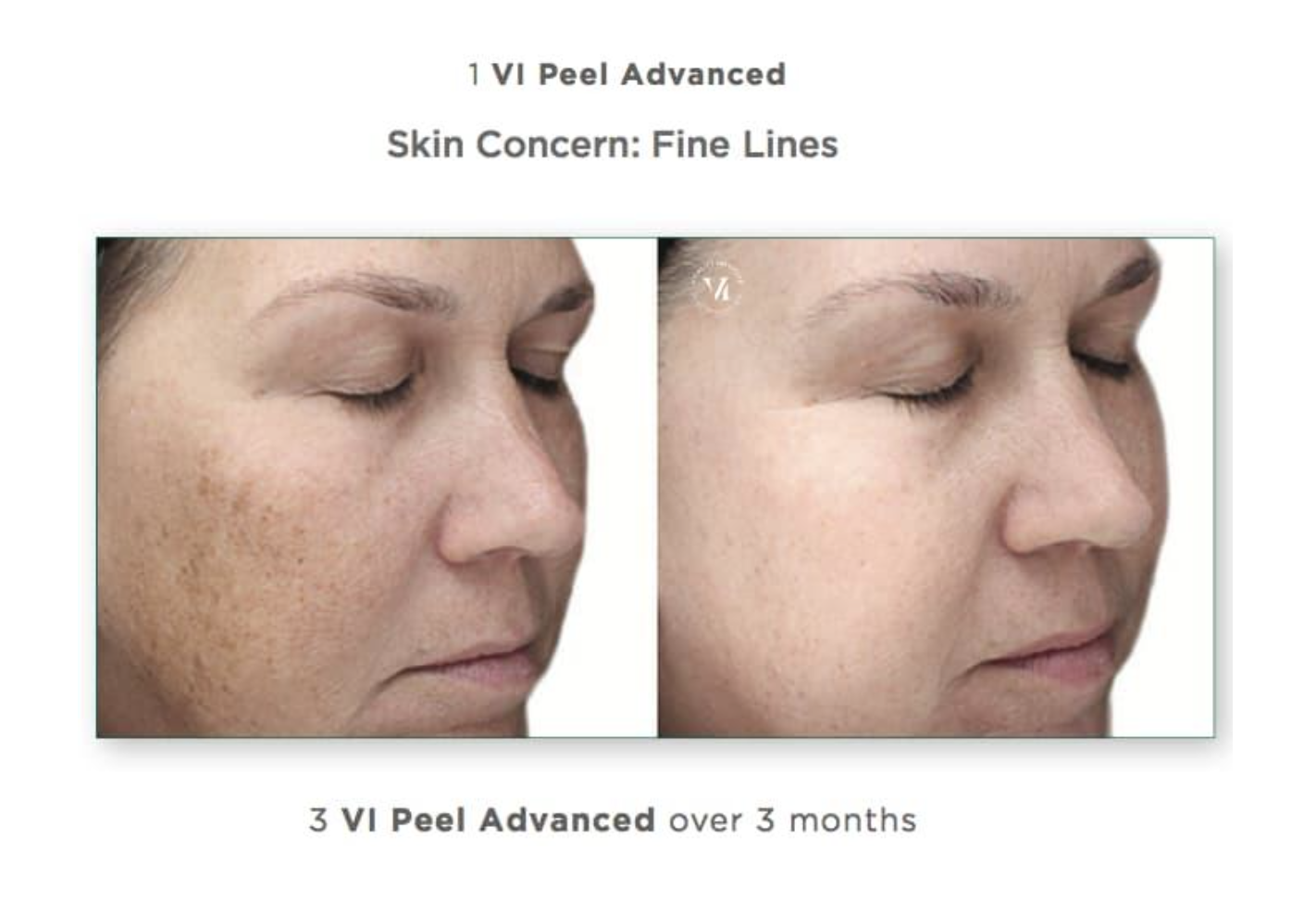
Sun spots, also called age spots, are flat brown marks left by years of sun. Lasers can treat them quickly, often in one or two sessions, and results tend to last longer than with fading creams.[3] Procedures also carry more risk of short-term crusting or darkening than creams do.[3] Before anyone treats a spot, it needs a close look, because what looks like an age spot could be skin cancer.[3] A new, growing or changing spot gets a proper skin exam, often by a dermatologist, before any laser.
Melasma is a different problem. It forms patches of darker skin that can last for years, sometimes for life.[1] The American Academy of Dermatology describes the most effective treatment as sun protection combined with medicine you apply to your skin, sometimes with a procedure added.[1] Those medicines include hydroquinone, a tretinoin and mild steroid combination, and gentler options such as azelaic acid.[1] A few studies show that adding a laser or light treatment can improve results in people who are already using those creams and protecting their skin.[1] That is the right role for a laser in melasma: an add-on.
The 1064 nm laser is well studied for melasma in its low-energy toning style. A 2022 systematic review pooled 42 studies covering 1,736 patients and judged it generally effective and safe compared with older options.[2] It is also clear about the limits. Protocols usually run around ten sessions, weekly or every other week.[2] A few studies followed patients for three months and saw melasma return in most of them, and long-term follow-up is thin.[2] Patchy light spots (mottled hypopigmentation) appeared in roughly one in ten patients in some reports and can persist, and the laser can itself trigger darkening through inflammation, especially in darker skin.[2]
If you have melasma, the plan starts with daily broad-spectrum sunscreen (a tinted formula is a good option), a prescription or medical-grade routine at home, and patience.[1] A laser may be added once the skin is calm and you understand the trade-offs. For dark patches and post-acne marks in more depth, see our hyperpigmentation page. Chemical peels and home care such as ZO Skin Health can sit in the same plan.
Flat sun spots after a skin exam, small red facial vessels and spider veins over a planned series, and a gentle, gradual lift in skin texture, with a wavelength that is easier on surface pigment than shorter ones.
As a cure for melasma, which usually returns without daily sun protection and creams, as a skin-tightening treatment, as a replacement for sclerotherapy on leg veins, and as risk-free for darker skin.
Red spots, facial veins and leg veins
For blood vessels, the laser uses longer pulses. Hemoglobin, the red pigment in blood, soaks up the light and turns it into heat, which damages the vessel while sparing most of the skin around it.[5] Very small veins may vanish right away, while larger ones often darken and stay visible for one to three months before fading.[4]
The most useful published numbers come from a single-center study that looked back at 255 patients with skin types II to V, treated with a long-pulsed 1064 nm Nd:YAG laser five times, four weeks apart.[5] After the fifth session, 97 percent of facial telangiectasias (small, thread-like red vessels) and about 81 percent of leg telangiectasias were rated markedly improved or cleared.[5]
Those figures are encouraging, but a look-back study with no comparison group is weaker evidence than a controlled trial. Side effects included pain and redness, dark marks after healing (up to about 14 percent, depending on the area), crusting, and some blistering on the legs.[5] The authors also note that 1064 nm is not their first choice for very shallow vessels on the face.[5]
For leg spider veins, sclerotherapy, an injection that irritates the vein wall so it seals shut, is the most common treatment, and spider veins usually fade within three to six weeks, sometimes after two or three rounds.[4] Lasers are an option for spider veins too, but full clearing often takes three or more sessions.[4] Larger, bulging or painful leg veins are a separate matter for a vein specialist, not a cosmetic laser visit.
After vein treatment, protect the area from the sun for three to four weeks to help prevent dark spots.[4] In the Lowcountry, with beach weather most of the year, that often means booking leg sessions for the cooler months.
Fine lines and texture: what “rejuvenation” can mean here
For texture, the laser is used in a gentler, nonablative way. The skin surface is cooled while the light heats the deeper layer, so the top layer stays intact.[6] The idea is that this controlled heat prompts the skin to remodel over time, and downtime is minimal.[6]
The results are real but modest. In one study, 51 patients with skin types I to V enrolled and 34 finished at least seven sessions.[6] Three physicians judged before and after photos without knowing which was which, and rated overall improvement at 20 percent, coarse wrinkles at about 12 percent, and skin laxity at about 17 percent.[6] Patients rated their own improvement higher, at about 41 percent overall.[6] The authors called the change subtle and gradual, and no side effects were reported.[6] That small laxity change is where talk of “mild tightening” comes from.
This is a skin-quality treatment, not a lift. Over a series of visits it can soften fine lines and even out a dull surface. For deeper concerns, another approach usually fits better: skin resurfacing for deeper lines and rough scarring, skin tightening for laxity, and neurotoxins for lines that come from facial movement.
Spots, veins, or both? Each one needs a different setting and a different number of visits. Call 843-981-0870 to have Ashley look at your skin, sort out which concerns this laser suits, and point you to a better tool for the ones it does not.
Darker skin, sun, and planning your sessions
The 1064 nm wavelength is often picked for medium and darker skin because it targets melanin less efficiently.[6] Less is not none. Dark marks after healing showed up in the vein study, and laser toning for melasma can cause both darkening and patchy light spots.[2][5] A 2023 review of dark marks in skin of color concluded that lasers stay second line to topical treatment, with Nd:YAG lasers as an add-on for marks that resist creams, used with appropriate settings.[7]
Every laser plan at Solcara starts with a consult, not a booked session. Ashley Harwyn, PA-C, who is board certified in anti-aging and functional medicine, looks at the spots and vessels themselves, talks through your goals and your sun habits, and tells you plainly whether this laser, a different tool, or no treatment is the better choice. You can see her at the Mount Pleasant office on Bramson Court or at The Longevity Club on Rutledge Avenue in downtown Charleston.
Sun protection is part of the treatment. Broad-spectrum SPF 30 or higher, protective clothing and shade help keep treated spots from coming back.[3] If a beach trip or a summer on the boat is coming up, tell us at the consult so the timing works with your skin.
Laser Services
An overview of every laser treatment we offer and how they differ. Read Laser Services.
Hyperpigmentation
For melasma and dark marks, where creams and sun protection come first. Read Hyperpigmentation.
Skin Resurfacing
When deeper lines, scars or rough texture are the main goal. Read Skin Resurfacing.
Skin Tightening
For loose or crepey skin, which this laser only touches lightly. Read Skin Tightening.
 Ashley Harwyn, PA-C
PA-C, ABAAHP · Founder, Solcara Health
Online
Tap a question to ask
Find out which of your skin concerns this laser can help
Start with a consult: we look at your spots and vessels, agree on what is worth treating, and set the number of sessions before the laser ever comes out.
BOOK A CONSULTATION →Or call 843-981-0870
Ashley Harwyn, PA-C, ABAAHP
Founder, Solcara Health · Diplomate, American Board of Anti-Aging Health Practitioners (ABAAHP)
Ashley has practiced medicine for more than fifteen years. Her path into it began at home, with a family member born with a congenital heart defect and a childhood spent watching how much the quality of a clinician's attention could change the shape of a life. She has since practiced across a range of settings, including medical mission work in Uganda, before founding Solcara to build the kind of practice she kept wishing existed, one that treats patients as whole people and tells them the truth about what the evidence does and does not support.
Full bio →References
American Academy of Dermatology patient guidance on melasma, age spots and leg veins, a 2022 systematic review of low-fluence 1064 nm laser toning for melasma, clinical studies of the long-pulsed 1064 nm Nd:YAG laser for vessels and facial rejuvenation, and a 2023 review of lasers for dark marks in skin of color, each accessed October 4, 2026.
- American Academy of Dermatology. Melasma: Diagnosis and treatment. AAD. 2022. aad.org
- Lee YS, Lee YJ, Lee JM, Han TY, Lee JH, Choi JE. The Low-Fluence Q-Switched Nd:YAG Laser Treatment for Melasma: A Systematic Review. Medicina (Kaunas). 2022. pmc.ncbi.nlm.nih.gov
- American Academy of Dermatology. What can get rid of age spots?. AAD. 2021. aad.org
- American Academy of Dermatology. Leg veins: Why they appear and how dermatologists treat them. AAD. aad.org
- Ozyurt K, et al. Treatment of Superficial Cutaneous Vascular Lesions: Experience with the Long-Pulsed 1064 nm Nd:YAG Laser. The Scientific World Journal. 2012. pmc.ncbi.nlm.nih.gov
- Dayan SH, Vartanian AJ, Menaker G, Mobley SR, Dayan AN. Nonablative Laser Resurfacing Using the Long-Pulse (1064-nm) Nd:YAG Laser. Archives of Facial Plastic Surgery. 2003. doi.org
- Sowash M, Alster T. Review of Laser Treatments for Post-Inflammatory Hyperpigmentation in Skin of Color. American Journal of Clinical Dermatology. 2023. doi.org
Medical Disclaimer: This page is for educational and informational purposes only and does not constitute medical advice, and reading it does not create a patient-provider relationship. It describes general medical information and categories of care, not a recommendation that any individual start, stop, or change any test, treatment, or medication. Any diagnosis or treatment decision requires evaluation by a qualified, licensed clinician who knows your personal and family history. Consult a qualified healthcare provider before making medical decisions. Information reflects sources available as of October 4, 2026.
Ashley Harwyn, PA-C, ABAAHP, is a Diplomate of the American Board of Anti-Aging Health Practitioners (ABAAHP) through A4M and the founder of Solcara Health. Solcara serves South Carolina from Downtown Charleston (163 Rutledge Ave, Ste 202, The Longevity Club) and Mt. Pleasant (496 Bramson Ct, Ste 120).
Laser Skin Rejuvenation FAQ's
Quick Links